Corn is a global staple, but traditional farming methods come with challenges that can limit efficiency and yield. From soil compaction caused by tractors to high input costs and beyond, farmers are constantly looking for better solutions.
This is where agricultural spray drones come in, offering innovative ways for farmers to manage crops. Read on as we explore the various ways to use agriculture drones for row crop farming, transforming crop management practices.
Increased Precision, Reduced Yield Loss
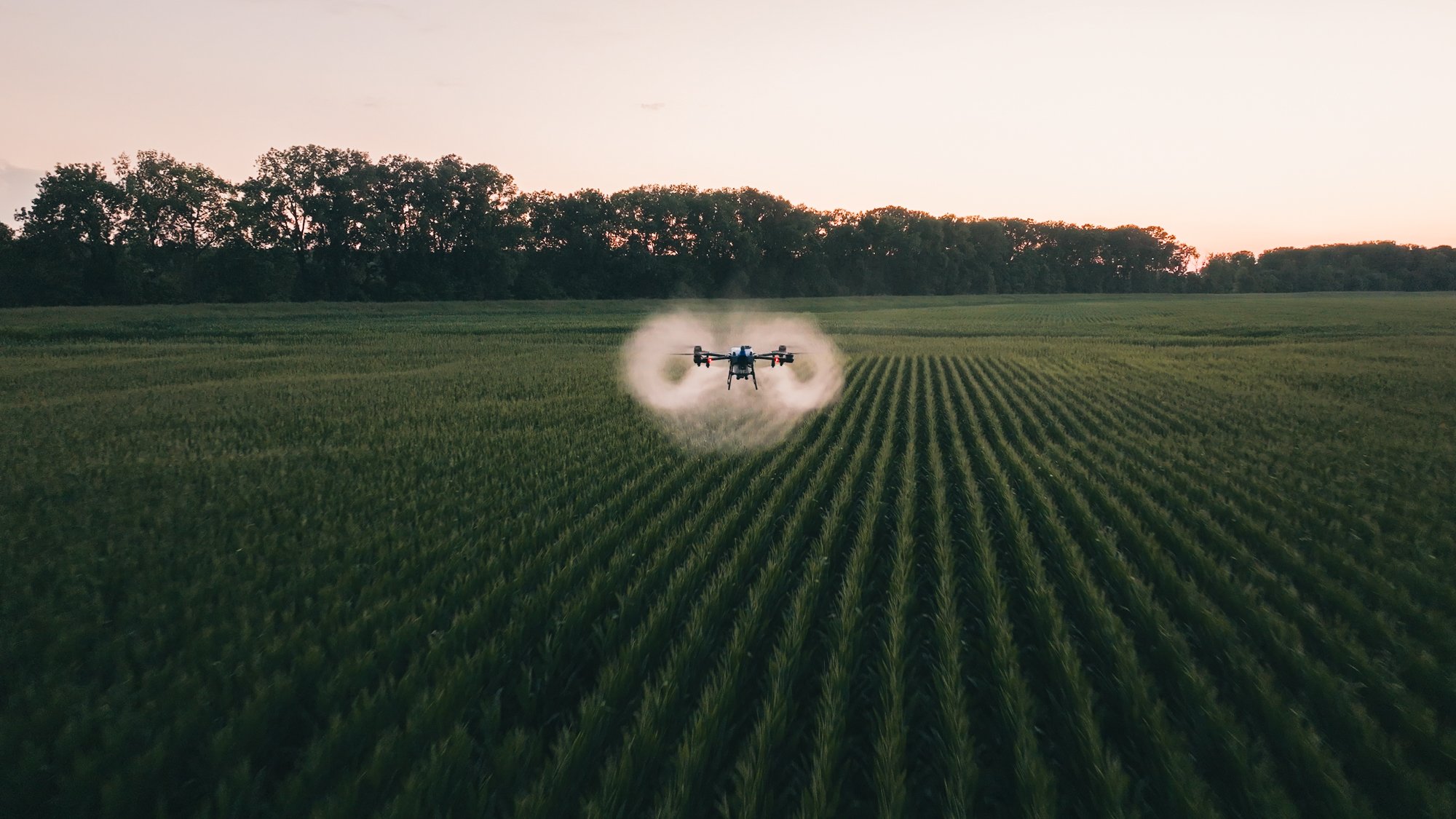
One of the biggest advantages of agricultural spray drones is their ability to deliver treatments with remarkable precision. With this technology, farmers get the benefits of aerial application, while taking advantage of equipment capabilities that allow for operation closer to the crop canopy (thereby dispensing product closer to intended targets, increasing precision and decreasing potential waste).
And unlike tractors, which can damage crop canopy, especially while making late season applications, drones operate from above, reducing yield loss impacts from wheel tracks.
Equipment Savings
While there’s much to be said about the efficiency of modern day ag equipment, large-scale tractors and ground rigs also reflect a modern-day price tag. Comparatively, spray drones offer farmers an affordable means of aerial application. After all, many farmers may own a tractor or even a high boy spray rig, but how many farmers own an airplane or helicopter?
From a pricing perspective:
- Self-propelled high boy spray rig with 120 ft boom – could run $500,000 - $750,000
- Pull-type spray rig (high-capacity, not for high canopy crop use) – could run $125,000
- Starting price for a modern day spray drone package (such as the EAVision J150) begins around $40,500
Enhancing Crop Health and Safety
Drones allow for timely interventions that are not always possible with ground machinery. After rainfall, a tractor might need to wait a day or two before entering a muddy field. A drone, on the other hand, can be in the air just a few hours after the rain stops, which allows for prompt treatment that minimizes potential losses.
This flexibility is especially useful in the later growth stages when it's difficult for tractors to access the field. By enabling consistent pest and disease management throughout the growth cycle, drones help to secure a higher yield. They also improve safety by providing alternative methods of aerial application. Where planes and helicopters are great options for large, open fields, spray drones can be an effective management tool for fields that are tougher for traditional aerial application methods to navigate safely.
A Smarter Future for Corn Farming
From spraying herbicides before planting to seeding cover crops after harvest, drones have a role to play at every stage of the corn lifecycle. The adoption of this technology offers a clear path toward more sustainable and profitable agriculture.
By learning the ways to use agriculture drones for corn farming, growers can increase their yields, reduce their costs, and lessen their environmental impact. It's a strategic move that equips farmers for the future, one flight at a time.
Ready to make the change? Explore our groundbreaking EAVision J150 at Agri Spray Drones. This advanced agricultural drone features powerful propulsion systems designed for rapid and comprehensive field coverage. Contact us today to learn how this technology can be tailored to your specific needs!