From Hayfields to High-Tech: How a Fifth-Generation Minnesota Farmer Found His Place in Drone Applications
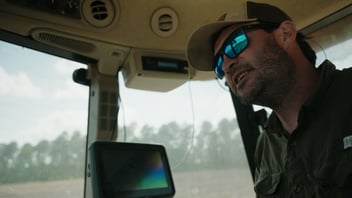
John Luhmann farms in Rushford, Minnesota, carrying forward five generations of family dedication to the land. His family has worked the bluffs of southeast Minnesota for decades, raising corn, beans, cattle, and now sheep, with John adding his own touch to the family legacy.
Like many who grow up with dirt under their fingernails, John felt the pull of the farm even when he stepped away for college. “I always knew I wanted to farm,” John shared. “When I got away from it in college, that’s when I really realized how much I loved farming and wanted to come back.”
As John returned, he wanted to find a way to contribute beyond the traditional operations. That’s when drones caught his attention.
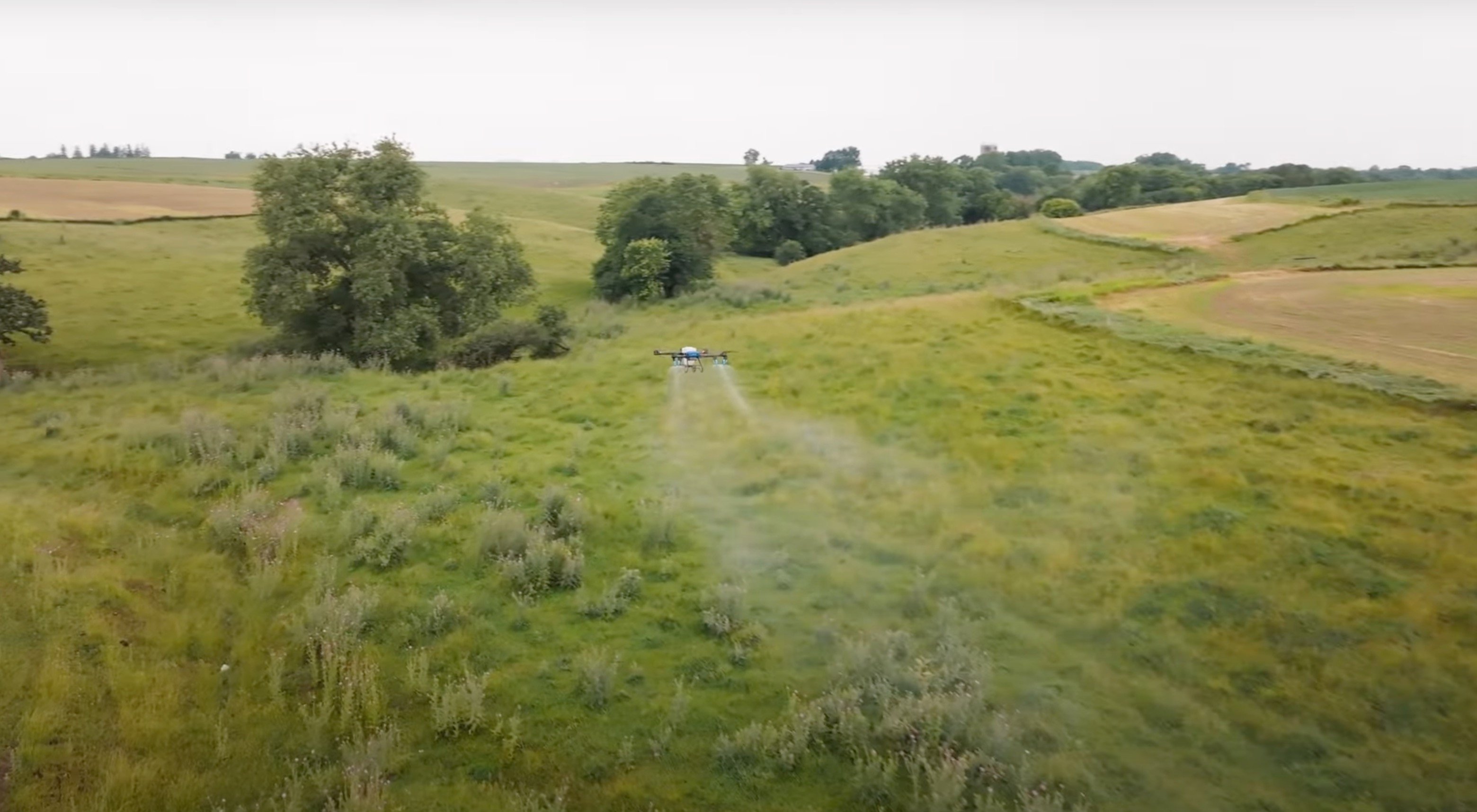
 In bluff country, fields are often tight and irregular, with steep ridges and winding tree lines that aren’t easy for planes or helicopters to navigate. John saw drones as the perfect tool for his terrain, especially for fungicide applications, spraying pastures for thistles, and seeding cover crops in the fall. “There was definitely a need for drones around here,” John explained, “and with our terrain, that’s where drones really thrive.”
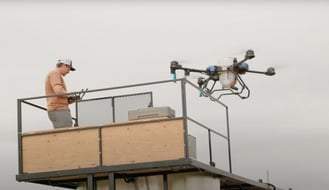
In 2023, John began with two T30 drones, covering about 5,000 acres in his first season. It was a season of learning, flying over rolling hills and working through the challenges of elevation shifts and trees, seeing firsthand how the technology could serve the needs of farmers like him. “I learned a ton that first year,” he said, “and it was a really, really good learning experience.”
This spring, John added a J100 to his fleet, quickly seeing the benefits. Compared to the T30, the J100 holds more, flies faster, and maps the field as it goes, allowing it to hug the terrain with precision. “The J100 is a beast,” John said with a smile. “It’s easily twice as efficient as the T30, and it really shines in the hills. It stays exactly where I want it, even around trees.”
John’s commitment to drone applications extends beyond Minnesota. A few years ago, he spent two weeks cutting hay on a ranch in southwestern Montana, which turned into a relationship that brought him back with his drones to spray biologicals on hay ground where ground rigs couldn’t go and planes weren’t available. “That first trip out to Montana was a great experience,” John shared. “Now I go back each year to help them with drone spraying. Having that extra payload capacity with the J100 really helps on those bigger fields.”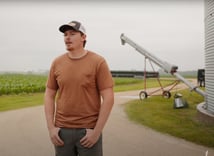
Closer to home, John’s core work focuses on spraying fungicide on corn and controlling thistles in pastures, while demand for seeding rye as a cover crop into standing corn in late summer has grown quickly in his area.
John credits much of his success to the partnership he has built with Agri Spray Drones. “I’ve had a great experience with Agri Spray Drones,” John said. “They’ve helped me through any problems I’ve had, and on the legal side of things, I definitely wouldn’t have been able to do it efficiently on my own.”
For farmers considering drones, John encourages them to do their homework and be ready to put in the work. “Do your research, know what you’re getting into, and once you get going, work hard,” he advised. “Drones won’t replace your work ethic, but they’ll help you get more done in a day while caring for your land with precision.”
It’s a good life, and for John Luhmann, there’s no place he would rather be than working the land while embracing new technology to care for it and continue his family’s farming legacy.
Read On