
Sections Of Warranty
Component Warranty Timelines
|
12 Month Coverage |
Less Than 12 Month Coverage |
|
Solenoid Valve |
Water Pump (7,925gal) |
|
Super-Link Communication Repeater and Charger |
Connectors (1 month) |
|
Surveying Tool and Charger |
Wires (1 month) |
|
CPU Control Module |
Hoses (1 month) |
|
Forward(LiDAR)/ 360° Radar (Upper/Lower) |
Joints (1 month) |
|
Frame (Beams, Front Module Bracket, Rear Bracket) |
Tees (1 month) |
|
Spray Tank |
Plastic Brackets (1 month) |
|
Nozzles (12months or 7,925gal) |
Hardware (1 month) |
|
Weight Sensors |
Landing Gear (1 month) |
|
Remote Controller |
Propeller Blade (1 month) |
|
Power ESC Module |
Plastic Parts (1 month) |
|
Power Battery (12 months or 1,500 cycles) |
Power Motor (6 months or 200hours) |
|
Cooling Charger |
Section 1: Unpacking and Acceptance
1.1 Unpacking and Acceptance
When the goods arrive at the warehouse of the dealer/custom (direct sales), it shall be checked within 5 working days, and check whether the equipment is complete. If there are any missing parts or functional defects, please provide photos and other written materials to the corresponding sales representative within 48 hours. If no written objection is raised within 5 working days, it will be deemed as normal acceptance of the product.
1.1.1 For damages like compression or deformation caused during transportation, please retain relevant evidence to claim compensation from the logistics company.
1.1.2 If the functional defects found in the unpacking, the product cannot be used, the company will be replaced with corresponding parts free of charge. Contact dealer upon discovery of issue and file warranty claim with the dealer.
1.2 Standard of Warranty Liability
1.2.1 The warranty period for the entire device is 12 months, starting from the first activation of the aircraft.
1.2.2 The main components of the EAV J150 are, the body, battery, charger, survey tool, base station, and remote control.
1.2.3 After the warranty period exceeds, EAVision will continue to provide free online technical consultation and paid accessories purchase services.Section 2: The Warranty Process
Step 1: Determine warranty eligibility; refer to the sections below or contact your local dealer for assistance.
Step 2. Collect the required information for the issue experienced.
- For Crashes:
- Step 1:Take a video around the drone in its crashed state to show the extent of damage. Also take a video of the area the drone crashed in.
- Step 2: Take an image of the drone serial number.
- Step 3: Upload the flight log and FPV log data for the time frame of the crash. Please click HERE for a guide on uploading logs.
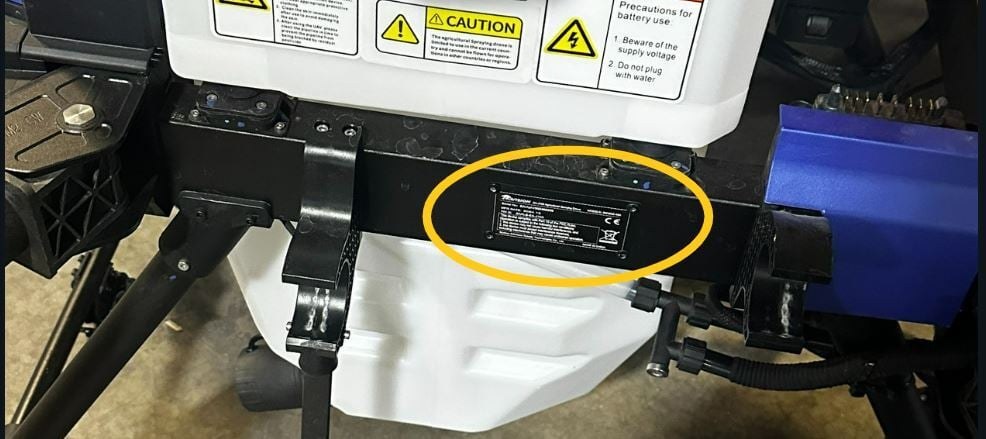
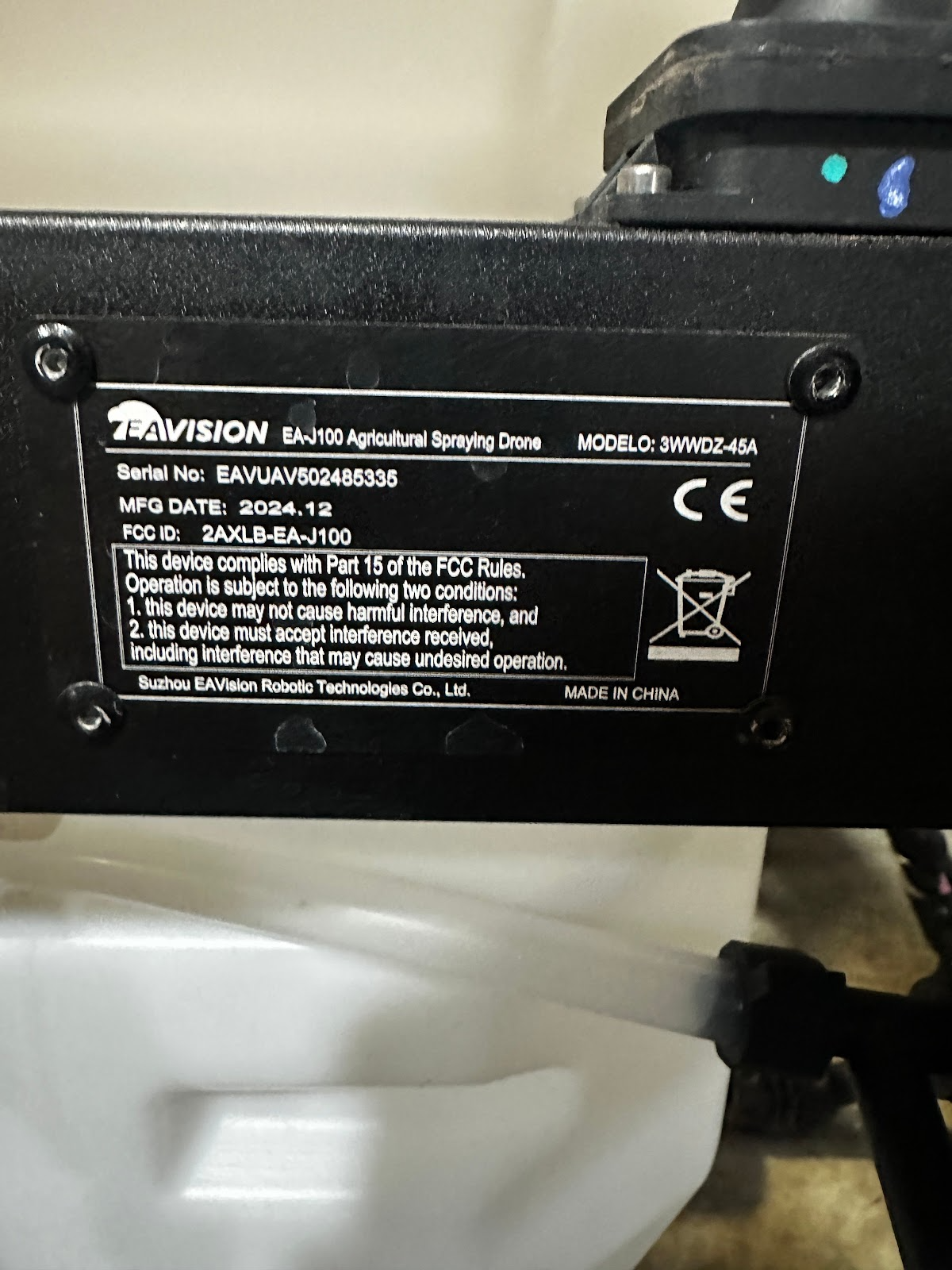
- For Non-Crash Issues:
- Step 1: Take a video showing the error on the remote controller, then show the drone serial number on the frame, then show the component with the issue to show no external damage.
- Step 2: Take an image of the drone serial number.
- If safety of flight is concerned, you must upload your UAV and FC logs and provide a detailed description of the issue at hand. We will use log data to determine the cause.
- For Battery Issues:
- Step 1: Take a video showing the issue with the battery, make sure to show the serial number on the battery in the video.
- Step 2: Take an image of the battery serial number.
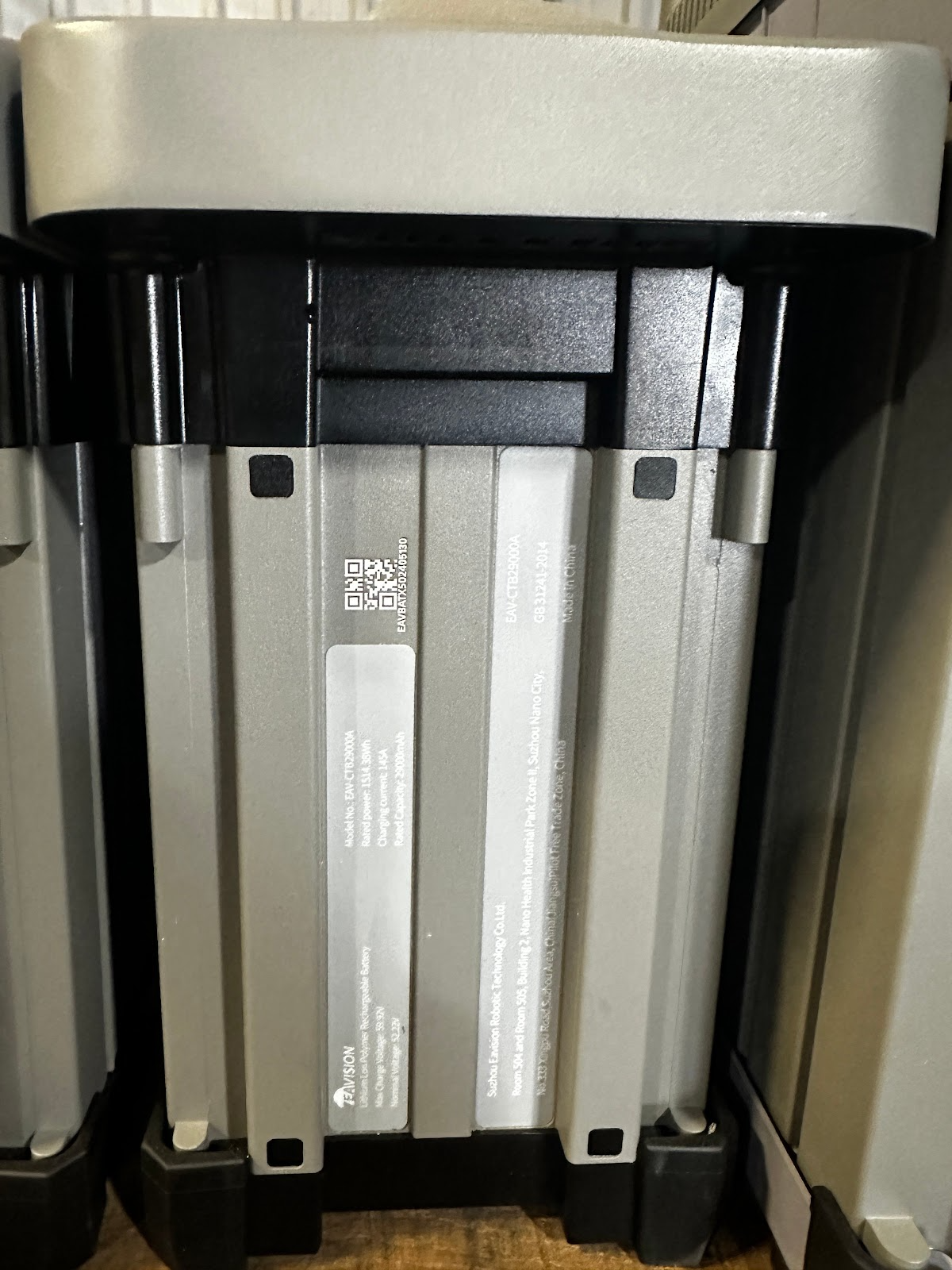
- For Remote Controller Issues:
- Step 1: Take a video showing the issue with the remote controller, make sure to show the serial number on the RC in the video.
- Step 2: Take an image of the RC serial number.
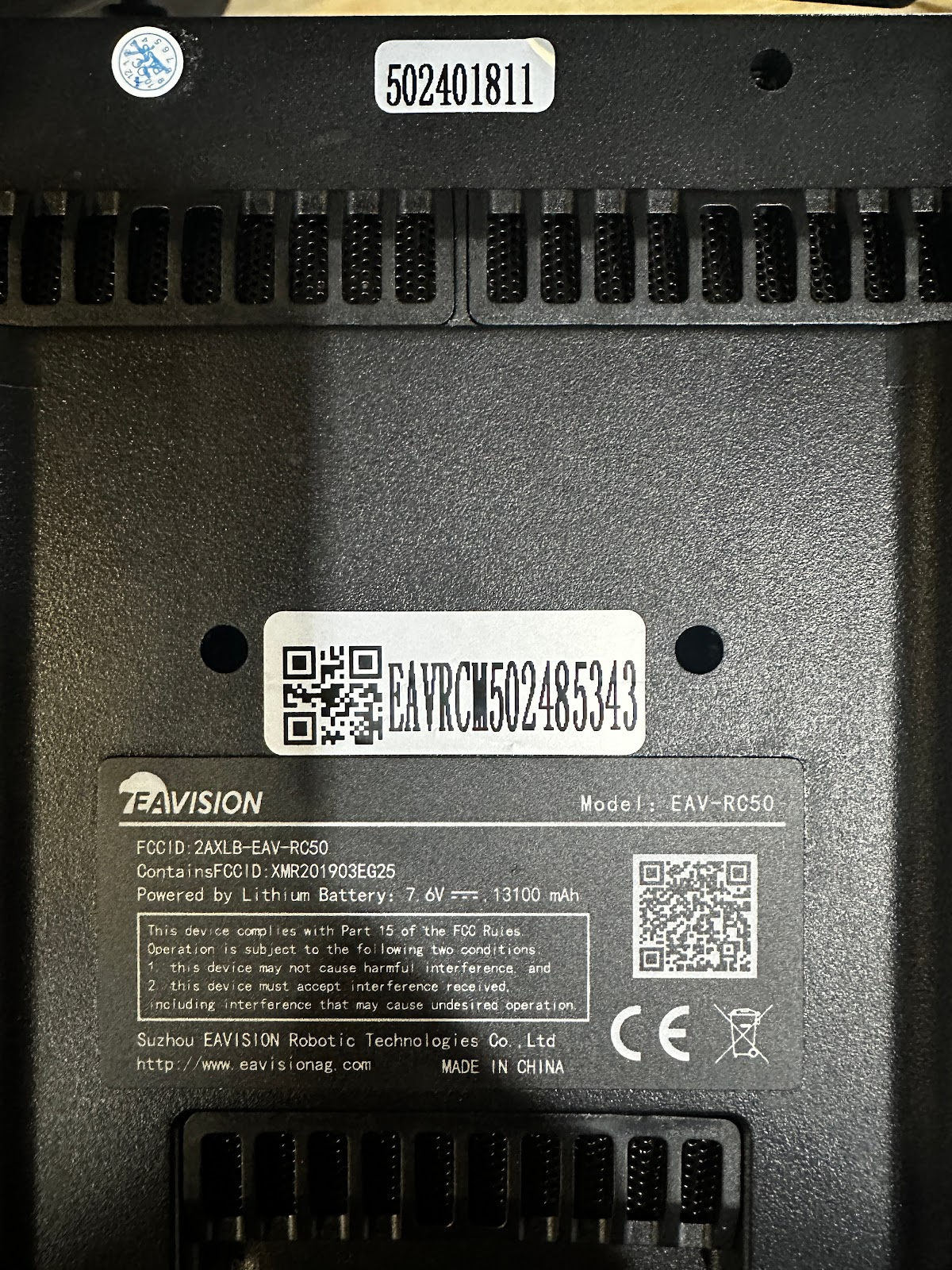
- For Accessory Issues:
- Step 1: Take a video showing the issue with the accessory item, make sure to show the serial number of the item in the video if applicable.
- Step 2: Take an image of the serial number.
Step 3: Contact your local dealer for timely service and support.
Step 4: Dealer verifies warranty eligibility and submits information via dealer warranty form.
Step 5: Warranty submission reviewed and decision made.
Step 6: If approved the damaged electronic components (LiDAR, CPU Flight Controller) must be returned to ASD. Non electronic components can be disposed of. Credit/refunds are issued after damaged parts are returned to and accepted by ASD if applicable. Customers should ensure that dealers doing repairs for them return the parts to ASD ASAP after repairs are completed.
Section 3: Coverage Details
3.1 What Does This Warranty Cover
Products with a warranty service must meet the following conditions:
- Normal use within the specified product warranty period;
- Product quality failure and other quality reasons;
- The UAV serial number, factory label and other signs should be consistent with the information in the order confirmation form, and there is no tearing or alteration;
- Provide valid proof of purchase.
3.2 What are NOT Covered Under the Warranty:
- The user cannot prove that the product is within the warranty period;
- The product exceeds the warranty period;
- The code of the whole machine, the factory label and other marks are inconsistent with the information on the order confirmation, or there are signs of tearing or alteration, and the source cannot be proved;
- Equipment failure or damage caused by unauthorized disassembly of the flight control host, CPU control module, power module, GPS and communication module, camera module, height sensor, distance sensor, rack, power ESC module, and power motor by the user or operator;
- Equipment failure or damage caused by abnormal factors such as water ingress into the product or storage of flammable materials in the surrounding environment;
- Fire or equipment damage caused by problems not in the product itself;
- The failure or damage caused by the user or operator's unlicensed operation, improper operation, failure to follow the instructions for use, or beyond the normal use conditions, forcibly using the product;
- Modifications or additions made by users or operators that do not comply with official instructions and guidelines;
- Damage caused by taking off under unsuitable conditions for flight (such as equipment aging alarm, bad weather, strong wind 17 (8m/s or 28km/h and above), heavy fog, complex electromagnetic environment or strong interference source environment, or exceeding the maximum takeoff weight ) direct or indirect failure or loss caused by flight;
- Direct or indirect failures or losses caused by force majeure such as natural disasters, wars, terrorist attacks, riots, coups, etc.;
- Other faults or damages caused by problems not caused by the design, manufacture, quality of the product itself, and equipment damage caused during transportation;
- All loss of rental equipment due to theft, robbery, etc.;
- Any damage or loss caused intentionally; Damage caused by reliability and compatibility issues when used with non-EAV certified third-party accessories, batteries, and software at the same time;
- Natural wear or no damage to the surface, shell or frame of the parts used;
3.3 Disclaimer Clause
The radar sensors are high sensitivity components, yet they also have limitations in some circumstances. Please pay attention to the following situations, EAVision do not cover it under warranty.
3.3.1 Radar Sensor Related
- Due to the dirty visual module, dust or pesticide adhesion, the visual failure or the failure to work properly in flight is not covered by the warranty. It is recommended that the pilots pay attention to the clear camera lens and keep them clean before taking off.
- The radar detection range is objects exceeding 3.9 inches(10cm). Therefore, during surveying, pilots need to pay special attention to fine mesh wires less than 3.9 inches (10cm) within the plot, normal obstacles such as trees, etc., and maintain a safe range of 6.5feet (2m) from the boundary. This situation is not covered by the warranty.
3.3.2 Obstacle Avoidance Related
IMPORTANT: The radar detection system can only reliably detect objects larger than 3.9 inches (10cm). During surveying and mapping operations, pilots must maintain visual awareness and use conservative flight planning around small wires, fine mesh, and boundary areas. A 6.5 feet (2m) safety buffer from plot boundaries is required when fine wires are present.
The following obstacle avoidance scenarios are NOT covered by warranty because they involve known radar limitations or operational situations requiring pilot judgment:
1. Wire Detection and Electrical Infrastructure Hazards:Dense Electrical Wire Areas:
- When operating in areas with multiple electrical wires or wire infrastructure, collision warranty coverage does not apply
- Wires smaller than 3.9 inches (10cm) diameter (most standard electrical wires) cannot be reliably detected
- Wire coatings that are black, dark, or highly reflective create additional detection challenges
High-Risk Electrical Scenarios:
- Power pole/tree crossing: After climbing over power poles or tall trees, horizontal power lines extending from these structures may not be detected
- Steep terrain following: When following slopes steeper than 45 degrees, overhead wires may appear within 13-20 feet (4-6m) above the aircraft
- Takeoff hazards: Wires positioned directly above takeoff points pose collision risk during initial climb
- Active spraying near slopes/trees: During spray operations (nozzles active) on terrain >45 degrees or near tree lines, wires within 16-32 feet (5-10m) create high collision risk
- Shallow-angle approaches: When aircraft flight path approaches wires at angles less than 70 degrees from perpendicular, wire strikes are more likely due to extended exposure time
Inadequate Hazard Identification:
- Unmarked electrical plots: Operating in areas containing electrical infrastructure without identifying wires during flight planning
- Insufficient boundary margins: Flight operations with boundary points closer than 10 feet (3m) to electrical wires
- Missing wire mapping: Failure to conduct proper pre-flight surveys to identify overhead hazards
Leafless Trees and Bare Branches:
- Trees without leaves or with fallen foliage present bare branches that cannot be detected by radar
- Aircraft cannot maintain proper terrain-following altitude relative to bare branch obstacles
- Pilots must increase flight altitude and monitor aircraft attitude closely in these conditions
4. Specific Obstacle Scenarios Not Covered:
The following represent high-risk situations where obstacle avoidance may fail:
- Electric Wire Strikes
- Collision with any electrical wires, particularly those under 3.9 inches (10cm) diameter
- Small Object Collisions
- Impact with obstacles smaller than 1cm width when obstacle avoidance is active
- High-Speed Limitations
- At speeds above 23ft/s (7m/s) and below 32.8ft/s (10m/s) with obstacles <3.9 inches (10cm) and approach angles <30 degrees, avoidance system effectiveness decreases
- At speeds above 32.8ft/s (10m/s) collision with obstacles is not covered, it is pilot responsibility to ensure separation and pre-mapping of obstacles.
- Boundary Proximity Hazards
- Obstacles within 20 feet (6m) of plot boundaries may not be properly marked, leading to avoidance system failures
- Multiple Obstacle Scenarios
- When more than 3 obstacles are clustered closely together, the avoidance system may become overwhelmed
- Takeoff Proximity Issues
- Tall obstacles within 16 feet (5m) of takeoff point don't allow sufficient climb time for avoidance
- Turning Point Hazards
- Flight path turning points positioned too close to obstacles create avoidance conflicts (like power lines or overhangs).
To maintain warranty coverage during obstacle avoidance operations:
- Pre-flight surveys: Identify and mark all known electrical infrastructure and wire hazards
- Conservative boundaries: Maintain minimum 10 feet (3m) clearance from plot boundaries near electrical infrastructure
- Proper plot designation: Mark plots containing electrical wires during flight planning
- Appropriate flight speeds: Maintain speeds that allow effective obstacle detection and avoidance
- Perpendicular wire crossings: When wire crossing is unavoidable, approach at 90-degree angles when possible
- Visual monitoring: Maintain visual contact and manual override capability in high-risk areas
Pilot Responsibility: These scenarios require active pilot management because they exceed the technical capabilities of the automated obstacle avoidance system. The 3.9 inches (10cm) detection threshold and environmental factors create predictable limitations that must be managed through proper planning, conservative operations, and visual oversight. Any crash that is a result of obstacle avoidance systems being disabled will be considered not covered under warranty. It is the pilot's responsibility to maintain obstacle separation.
3.3.3 Nozzle Related
- The following conditions are not covered by the warranty:
- The nozzle can spray the wettable powder(WP), but it will seriously affect the nozzle life-span, after each use of the powder spraying, be sure to clean the nozzle, and keep the nozzle and disk dry, otherwise it may lead to the nozzle blockage, damage, Decreased nozzle life span;
- The nozzle is a high-speed rotating part, pay attention to protection in the process of handling, use and storage, such as the nozzle appears obvious bump, impact, deformation and cause damage;
- Non-failure caused by the product itself, but fall, impact, water, fire and other damage;
- Abnormal use or improper use, such as turn on the nozzle and keep spinning without spraying water for more than 5 minutes, resulting in poor heat dissipation and damage;
- Damage caused by installation, misconnection and disassembly not according to the official website or after-sales customer service guidance;
- In harsh environments such as sand, dust, cotton wool, etc. may cause damage caused by nozzle rotation blockage;
- Unable to provide the nozzle number, aircraft model, aircraft operation coverage and other relevant purchase and invoice information.
3.3.4 Battery-Related
1. The following conditions are not covered by the warranty:- The battery has not been fully charged and discharged for 3 months, resulting in power loss and over-discharge of the battery, and the storage environment is too humid, causing the battery to be damp.
- The aircraft is forced to fly manually, causing the battery to be below 30% and unable to return safely, causing the accident and the battery being over discharged.
- Battery damage caused by misuse and misuse of the battery charger.
- Water damage: Wiping the battery with a wet rag, or cooling down the battery with water, will cause the battery failure due to the water damage.
- The failure is not caused by the product itself, but the damage caused by falling, impact, falling into water, fire, etc., and the extrusion deformation caused by transportation.
- Damage caused by the installation and disassembly not according to the official website or after-sales service guidance.
- Battery serial number and faulty information are not provided.
- The battery is damaged due to hot swapping(live plugging and unplugging) of the battery, or the battery is damaged by a short circuit caused by pesticides on the battery connector on the aircraft.
- If the setting “Automatically determine low battery return” is disabled and the drone crashes as a result of low power, it is not covered under warranty.
3.3.5 Lifting Requirements and Exemption Clauses
- Requirements:
- The operators of agricultural unmanned aerial vehicles should have relevant training and certificates, and can only carry out agricultural operations; And fully understand and evaluate the flight area, meteorological conditions, etc. to ensure safe flight;
- The problems with agricultural unmanned aerial vehicle lifting equipment may also lead to accidents, such as broken lifting ropes, malfunctioning lifting equipment, etc;
- Pay attention to the environment of the agricultural unmanned aerial vehicle lifting operation site before the lifting operation. For example, whether the flight area is suitable, whether the surrounding environment is safe, etc.
- The weight during lifting operations cannot exceed 132 pounds (60kg); When manually hanging heavy objects for lifting, it is strictly prohibited to exceed a speed of 22.9ft/s (7m/s); The height shall not exceed 98 feet (30m) of the true height; Manual/automatic crossing of electrical wires is strictly prohibited; Be careful not to make the rope too light and be careful not to wrap it around; It is strictly prohibited to fly with unknown weight, resulting in overweight flight; Serious power consumption is strictly prohibited. If the battery level is 30%, it is necessary to return home and replace the battery; It is strictly prohibited to have people, goods, livestock and other situations around and below the unmanned aerial vehicle for crop protection and agriculture that affect flight safety when decoupling.
- Disclaimers:
- In case of collision or plane crash accidents caused by malfunctions in various modules of the product equipment, corresponding materials shall be provided according to the warranty requirements for warranty application;
- It is strictly prohibited to load non-agricultural goods such as building materials and photovoltaic panels during lifting operations;
- During the lifting operation, there may be danger that may cause damage to the three parties, and loading the goods is not within the scope of compensation;
- Without a lifting certificate, warranty services cannot be provided.
- Lifting does not support ground imitation and obstacle avoidance, nor does it support wire avoidance.
3.3.6 Other Disclaimers
- The rollover or crash caused by the arm lock not being fastened is not covered by the warranty.
- Improper maintenance leads to damaged faults such as folder, nozzle, motor.
- Failure to maintain the related screws and accessories of the folders as required, resulting in the loose arm lock of the folders;
- The interface of the rear distribution board is dirty and damaged due to lack of maintenance.
- If the UAV is damaged due to improper maintenance, such as the motor screw, reverse installation, blade installation error flight control, flight control GPS installation, motor installation Angle error, etc.;
- No mission sent, no flight route, manual flight crash;
- Unable to provide the information required for claiming the warranty, and the cause of the fault cannot be determined. Such as damaged pictures or videos of faults, plot number, flight log (no log uploaded after crash and maintenance coverage), etc.;
- Flight height is beyond max setting height limit.
- Other faults or damages caused by problems other than product design, manufacturing, quality, etc.;
- Aircraft damage due to low or deliberate use of a faulty battery.
- The homework site should be kept within a range of 65 feet (20m) from the high-voltage line.
- Drones are prohibited from flying through power lines.
Section 4: Accessory Items
4. Accessory Items
4.1 Charging Station
- The user cannot prove that the product is within the warranty period;
- The product exceeds the warranty period;
- Equipment failure or damage caused by unauthorized disassembly
- Equipment failure or damage caused by abnormal factors such as water ingress into the product or storage of flammable materials in the surrounding environment;
- Fire or equipment damage caused by problems not in the product itself;
- The failure or damage caused by the user or operator's unlicensed operation, improper operation, failure to follow the instructions for use, or beyond the normal use conditions, forcibly using the product;
- Modifications or additions made by users or operators that do not comply with official instructions and guidelines;
- Improper power plug installation resulting in damage to the charging station.
- Direct or indirect failures or losses caused by force majeure such as natural disasters, wars, terrorist attacks, riots, coups, etc.;
- Other faults or damages caused by problems not caused by the design, manufacture, quality of the product itself, and equipment damage caused during transportation;
- All loss of rental equipment due to theft, robbery, etc.;
- Any damage or loss caused intentionally; Damage caused by reliability and compatibility issues when used with non-EAV certified third-party accessories, batteries, and software at the same time;
- Natural wear and tear due to operator use.
- Improper maintenance of terminals, hot swapping battery, dropping battery which can cause damage to terminal connectors of the battery and or charging station, improper installation of battery into the charging station (ie. installing backwards direction),
4.2 Remote Controller
- The user cannot prove that the product is within the warranty period;
- The product exceeds the warranty period;
- Equipment failure or damage caused by unauthorized disassembly
- Equipment failure or damage caused by abnormal factors such as water ingress into the product or storage of flammable materials in the surrounding environment;
- Fire or equipment damage caused by problems not in the product itself;
- The failure or damage caused by the user or operator's unlicensed operation, improper operation, failure to follow the instructions for use, or beyond the normal use conditions, forcibly using the product;
- Modifications or additions made by users or operators that do not comply with official instructions and guidelines;
- Direct or indirect failures or losses caused by force majeure such as natural disasters, wars, terrorist attacks, riots, coups, etc.;
- Other faults or damages caused by problems not caused by the design, manufacture, quality of the product itself, and equipment damage caused during transportation;
- All loss of rental equipment due to theft, robbery, etc.;
- Any damage or loss caused intentionally; Damage caused by reliability and compatibility issues when used with non-EAV certified third-party accessories, batteries, and software at the same time;
- Natural wear and tear due to operator use.
4.3 Superlink and Tripod
- The user cannot prove that the product is within the warranty period;
- The product exceeds the warranty period;
- Equipment failure or damage caused by unauthorized disassembly
- Equipment failure or damage caused by abnormal factors such as water ingress into the product or storage of flammable materials in the surrounding environment;
- Fire or equipment damage caused by problems not in the product itself;
- The failure or damage caused by the user or operator's unlicensed operation, improper operation, failure to follow the instructions for use, or beyond the normal use conditions, forcibly using the product;
- Modifications or additions made by users or operators that do not comply with official instructions and guidelines;
- Direct or indirect failures or losses caused by force majeure such as natural disasters, wars, terrorist attacks, riots, coups, etc.;
- Other faults or damages caused by problems not caused by the design, manufacture, quality of the product itself, and equipment damage caused during transportation;
- All loss of rental equipment due to theft, robbery, etc.;
- Any damage or loss caused intentionally; Damage caused by reliability and compatibility issues when used with non-EAV certified third-party accessories, batteries, and software at the same time;
- Natural wear and tear due to operator use.
4.4 Handheld Survey Tool
- The user cannot prove that the product is within the warranty period;
- The product exceeds the warranty period;
- Equipment failure or damage caused by unauthorized disassembly
- Equipment failure or damage caused by abnormal factors such as water ingress into the product or storage of flammable materials in the surrounding environment;
- Fire or equipment damage caused by problems not in the product itself;
- The failure or damage caused by the user or operator's unlicensed operation, improper operation, failure to follow the instructions for use, or beyond the normal use conditions, forcibly using the product;
- Modifications or additions made by users or operators that do not comply with official instructions and guidelines;
- Direct or indirect failures or losses caused by force majeure such as natural disasters, wars, terrorist attacks, riots, coups, etc.;
- Other faults or damages caused by problems not caused by the design, manufacture, quality of the product itself, and equipment damage caused during transportation;
- All loss of rental equipment due to theft, robbery, etc.;
- Any damage or loss caused intentionally; Damage caused by reliability and compatibility issues when used with non-EAV certified third-party accessories, batteries, and software at the same time;
- Natural wear and tear due to operator use.
4.5 Spreading System
- The user cannot prove that the product is within the warranty period;
- The product exceeds the warranty period;
- Equipment failure or damage caused by unauthorized disassembly
- Equipment failure or damage caused by abnormal factors such as water ingress into the product or storage of flammable materials in the surrounding environment;
- Fire or equipment damage caused by problems not in the product itself;
- The failure or damage caused by the user or operator's unlicensed operation, improper operation, failure to follow the instructions for use, or beyond the normal use conditions, forcibly using the product;
- Modifications or additions made by users or operators that do not comply with official instructions and guidelines;
- Direct or indirect failures or losses caused by force majeure such as natural disasters, wars, terrorist attacks, riots, coups, etc.;
- Other faults or damages caused by problems not caused by the design, manufacture, quality of the product itself, and equipment damage caused during transportation;
- All loss of rental equipment due to theft, robbery, etc.;
- Any damage or loss caused intentionally; Damage caused by reliability and compatibility issues when used with non-EAV certified third-party accessories, batteries, and software at the same time;
- Natural wear and tear due to operator use.
Section 5: Statement
- EAvision and Agri Spray Drones reserves the final rights to interpret the "Warranty Service" and its terms of service;
- The terms of "Warranty Service" are subject to the latest announcement of the official website. If there is any change, there will be no further notice. Please pay attention to the changes of the official website.
- If product components that are not within the warranty range fail, the user has the right to inquire about repair or replacement matters. The costs incurred by service requests outside the warranty service scope shall be borne by the service requester.
Drone Dock Amendment
These warranty terms govern aircraft operations conducted in conjunction with the Agri Spray Drones Drone Dock. This document is intended to be read alongside the EAV J150 Warranty Terms (2025 V1.0), which remain in effect in full. All standard warranty terms, exclusions, and claims processes defined in the J150 warranty apply unless otherwise specified herein.
Section 1 — Drone Dock Operations
The Agri Spray Drones Drone Dock is a fully integrated, automated refill and transport system designed for use with the EAV J150. The following terms govern warranty coverage for the aircraft when operating in conjunction with the Drone Dock.
1.1 Pilot Responsibility During Dock Operations
Operation of the J150 in conjunction with the Drone Dock — including all takeoff, landing, and docking sequences — is the sole responsibility of the pilot in command, consistent with the same standard of care required when operating from a platform trailer or any elevated or confined landing surface.
The pilot is required to maintain situational awareness throughout all dock approach, landing, and departure sequences. If at any point a landing or takeoff appears unsafe — including but not limited to misalignment with the dock, partial contact with the dock surface, or environmental interference — the pilot must take immediate manual control to correct or abort the maneuver.
⚠ Crashes, rollovers, or damage resulting from the pilot's failure to intervene in an unsafe landing or takeoff sequence are NOT covered under warranty. This includes scenarios where the drone makes partial contact with the dock, clips the dock frame, or lands in an unstable position that the pilot did not correct.
1.2 Case-by-Case Warranty Review for Dock-Related Incidents
ASD recognizes that certain incidents occurring during Drone Dock operations may involve factors beyond pilot control. Accordingly, all crash or damage claims involving the Drone Dock will be reviewed on a case-by-case basis. Coverage is not automatically granted or denied — each claim will be evaluated against the submitted evidence.
This includes, but is not limited to, scenarios where:
The drone tips or flips over within the dock after an otherwise normal landing
An unexpected mechanical or environmental event occurs during the docking sequence
The dock itself contributes to an unstable landing condition
Required Documentation — No Exceptions
UAV flight logs and FC logs uploaded via the EAV app for the relevant flight session
FPV video footage from the drone covering the incident
Photos of all damage to the drone
Photos of all damage to the Drone Dock
A written description of the sequence of events leading to the incident
Claims submitted without complete documentation will not be reviewed and will be considered ineligible for coverage. No exceptions will be made for missing log data. It is the pilot's responsibility to upload logs immediately following any incident.
1.3 Component Failure During Dock Operations
If a verified mechanical or electrical component failure on the aircraft directly causes a crash or incident during a dock landing or takeoff sequence, the damage will be evaluated under the standard aircraft warranty terms outlined in the EAV J150 Warranty Terms (2025 V1.0).
Examples of potentially covered component failures include:
Motor failure during takeoff or landing sequence
ESC failure causing loss of control during approach or departure
Flight controller malfunction during an otherwise properly executed docking maneuver
In all such cases, log data and FPV footage are still required to verify the root cause. If log data confirms a component failure as the primary cause of the incident, the claim will be processed under standard warranty terms for that component. Damage to the Drone Dock resulting from a covered component failure will be reviewed separately.
1.4 What is NOT Covered During Drone Dock Operations
The following scenarios are explicitly excluded from warranty coverage when operating with the Drone Dock:
Crashes or damage resulting from the pilot's failure to take manual control of an unsafe landing or takeoff
Damage caused by landing outside the dock landing zone
Damage caused by approaching the dock at excessive speed or incorrect angle
Incidents occurring when logs were not uploaded or FPV footage is unavailable
Damage caused by improper installation of the Drone Dock (surface mount or recessed)
Damage to the drone caused by a plumbing or refill system malfunction on the customer-side installation
Damage resulting from operating the dock in wind conditions exceeding the aircraft's rated wind tolerance (17 mph / 8 m/s)
Incidents where the obstacle avoidance system was disabled during dock approach or departure
Any incident where the drone was operated autonomously into the dock without pilot monitoring and override readiness
These warranty terms are effective as of April 1st, 2025 and are subject to the same interpretation and revision rights reserved by Agri Spray Drones. Agri Spray Drones reserve the final right to interpret these warranty terms and their service conditions.
For ASD Dealers
ASD relies on it's dealers to provide their local customers with the highest level of after-sales service and support. Our mission of Empowering Rural America is carried out through each one of our dealers on a local level.
Please follow the guides above for the various issues customers are experiencing to ensure the required information is obtained prior to connecting with ASD for warranty submissions.
Step 1: Determine warranty eligibility. Collect the required information for the type of issue being experienced.
Step 2: Provide your customer with services to ensure they get operational as quickly as possible.
Step 3: Fill out ASD dealer warranty form to provide ASD.
Step 4: Work with ASD warranty administrator to work through the warrant process.
Note: For EAVision warranties damaged electronic components like the LiDARs and CPU (flight controller) are required to be returned to ASD after repairs are completed. All other non-electronic components can be destroyed to guidelines and disposed of. Credit/refunds are not issued until damaged parts are returned and accepted at ASD.
J150 Upgrade Kit Amendment
J150 Upgrade Kit Warranty Extension
Created: Oct 8, 2026
Installing the J150 Upgrade Kit extends the J150 drone warranty by twelve (12) months under the existing J150 Limited Warranty terms. Batteries are covered by the amendment in Section 2: only the upgraded BMS top plate assembly is covered, not the battery cells. Other accessories are not included in this extended warranty coverage, these items include but are not limited to; Handheld Survey Tool, SuperLink, Spreading System, Charging Station, Remote Controller, etc.
1. Drone Warranty Extension
Upon installation of the J150 Upgrade Kit [by an authorized ASD dealer or as otherwise directed by ASD], the warranty on the upgraded J150 drone is extended for an additional twelve (12) months from the date of installation. During this extension, the drone remains subject to the same coverage, terms, conditions, and exclusions as the original J150 Limited Warranty, except as amended in Section 2 for batteries.
2. Battery Coverage Amendment
2.1 Covered Components
For batteries upgraded with the J150 Upgrade Kit, coverage during the extension period is limited to the Battery Management System (BMS) top plate assembly supplied in the Upgrade Kit, including the BMS circuit board and the battery latch connection, against defects in materials and workmanship under normal use.
2.2 Components Not Covered
The battery core, including the lithium polymer (LiPo) cells, cell pack, casing, and all original components not replaced by the Upgrade Kit, is not covered under this extension. Installation of the Upgrade Kit does not extend or renew any manufacturer warranty on the battery cells. Because the battery core consists of original components, its capacity, performance, and lifespan depend on its prior and ongoing use, storage, and maintenance.
2.3 Operator Responsibilities
The operator is responsible for storing, charging, and maintaining the battery according to your EAVision J150 operator manual.
This includes (but is not limited to):
- Storing batteries at the recommended charge level and temperature range;
- Avoiding deep discharge or prolonged storage at full charge; and
- Keeping the battery and drone power terminals clean, dry, and free of debris and corrosion, and inspecting them regularly for wear or damage.
2.4 Exclusions
In addition to the exclusions in the J150 Limited Warranty, the following are not covered:
- damage from external force, including drops, impacts, crashes, crushing, or puncture;
- damage from water, fertilizer, chemical, or other liquid ingress;
- arcing, burning, pitting, corrosion, or other damage to terminals, or BMS damage resulting from terminal condition;
- failures caused by improper storage, charging, or maintenance, including over-discharge, overcharging, or storage outside recommended conditions;
- cell degradation, cell imbalance, swelling, or loss of capacity;
- use of non-approved chargers, power sources, or accessories; and
- disassembly, repair, or modification of the battery or top plate by anyone other than ASD, EAVision, or an authorized dealer, or as directed by ASD.
2.5 Determination of Cause
All battery warranty claims are subject to diagnosis by ASD and/or EAVision, performed with the operator's authorized dealer or directly with the operator where Section 2.6 permits. ASD and EAVision will determine, at their sole discretion, whether a failure originates in the covered BMS top plate assembly or in excluded components or conditions. Their determination is final. Symptoms such as failure to power on, failure to charge, communication errors, or missing cell data do not by themselves establish a BMS defect.
2.6 Claims
To submit a claim, the operator must contact their authorized ASD dealer. The dealer will troubleshoot the battery with the ASD technical team and may request information such as photos of the battery and drone terminals, battery information screens, or test results. If ASD determines the failure is covered, the dealer will file the warranty claim on the operator's behalf.
Operators who purchased directly from ASD, or who do not have an authorized ASD dealer available to support them, may contact ASD directly. ASD will troubleshoot with the operator remotely and determine whether the failure is covered.
Batteries should not be shipped to ASD unless ASD specifically instructs otherwise.
2.7 Remedy
If a covered defect is confirmed, ASD will provide a replacement BMS top plate assembly, to be installed by an authorized dealer or as otherwise directed by ASD. Battery cells, casing, and other uncovered components will not be replaced under this warranty. A replacement top plate is covered only for the remainder of the original extension period. Replaced top plates and failed components become the responsibility of the dealer and will be disposed of according to ASD guidelines and applicable regulations.